
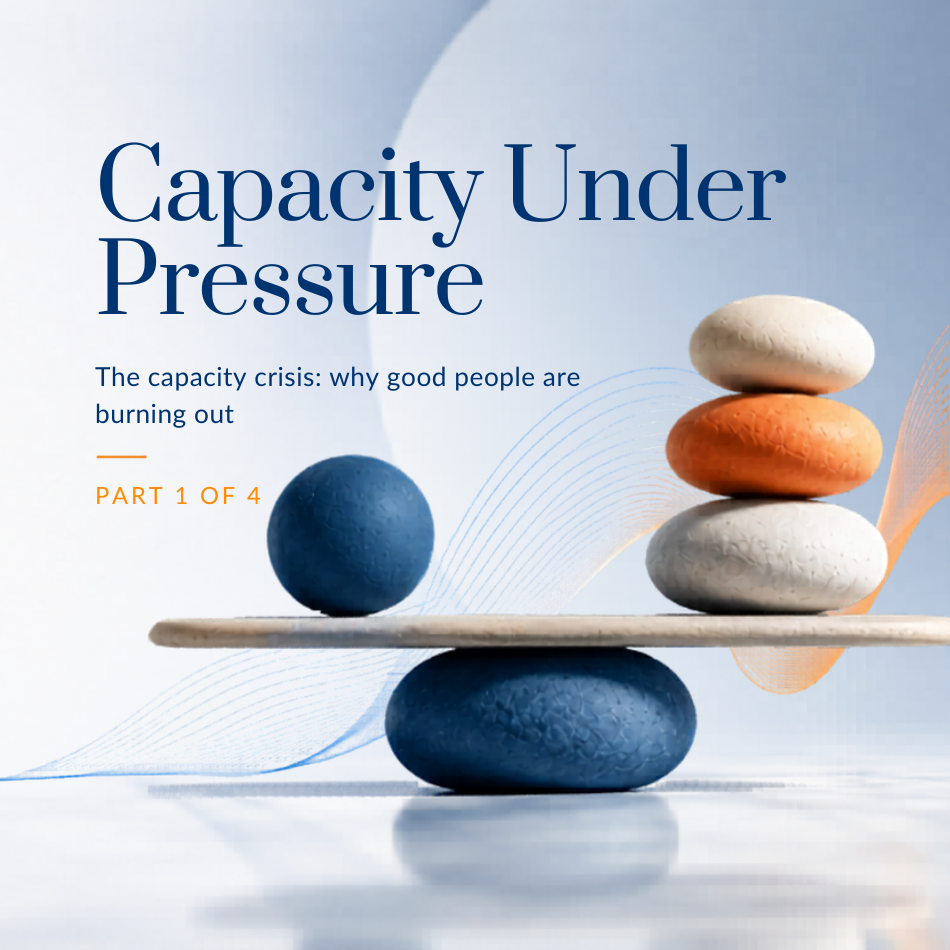
The capacity crisis: why good people are burning out
The strategy is sound, the deadlines are being met, and the transformation programme is moving forward. Yet underneath the delivery, things still feel strained.
People are more tired than they used to be, decisions take longer, and managers are carrying more than anyone realises. In addition, many organisations are pushing people beyond what they can sustainably absorb.
This is not simply a workload problem; it’s more about what people can realistically sustain.
53% of employees report feeling overwhelmed by too much change at once.
Not because the change itself is wrong, but because the pace, complexity, uncertainty, and volume of modern work are exceeding human capacity to process and respond.
Burnout has changed
Burnout today is not only driven by long hours. It is being shaped by:
- constant context switching
- sustained uncertainty
- fragmented attention
- emotional load
- pressure without recovery
Even high performers who appear to be coping are often operating far closer to depletion than we realise. Managers themselves are attempting to lead transformation while carrying significant pressure. We continue trying to solve a human capacity issue with process solutions alone:
- more communication
- more training
- more initiatives
Those things matter; however, they cannot compensate when people no longer have the capacity to absorb what is being asked of them.
What happens when capacity tightens
When pressure consistently exceeds capacity, predictable patterns begin to emerge:
- Thinking narrows
- Reactions become sharper
- Collaboration weakens
- Recovery drops behind pressure
- Survival mode replaces intentional leadership
This is not a weakness; it’s the human system responding to sustained pressure, and I’ve watched this pattern across organisational transformations for fifteen years. The breaking point is rarely strategy alone; it’s often the moment when demands consistently exceed what people can realistically absorb.
A different leadership question
The organisations navigating uncertainty most effectively are not simply driving harder. They are paying greater attention to what sustains human performance under pressure:
- energy
- attention
- connection
- the environments people operate within every day
Perhaps the real advantage going forward will not be how fast organisations can change but how effectively they help people sustain capacity through change.
Next in the series: The Four Human Patterns Under Pressure, what begins to emerge when capacity tightens.
What are you noticing most right now: exhaustion beneath delivery, slower thinking and decision fatigue, or people quietly disengaging?